About Carbon Budget Tracker
Empowering organizations to measure, monitor, and manage their carbon emissions in alignment with global climate goals.
Our Mission
To provide transparent, science-based tools that enable companies to understand their carbon budget, track their decarbonization progress, and align their climate strategies with Paris Agreement targets.
Our Vision
A world where every organization has the tools and insights needed to transition to net-zero emissions, contributing to a sustainable future for all.
What We Offer
Carbon Budget Analysis
Comprehensive carbon budget calculations based on science-based scenarios and global climate targets.
Emissions Tracking
Real-time monitoring of your organization's emissions trajectory against business-as-usual and transition scenarios.
Scenario Benchmarking
Compare your emissions pathway against global climate scenarios including NGFS, IEA Net Zero, and custom benchmarks.
Our Research
Published
Kampmann & Rekker
Nature Communications (2026) · Establishes open-assets.ai methodology
Rekker, Axelsson, Bjørn et al.
Nature Climate Change (2025) · Structured pluralism argument
Rao, Rekker, Humphrey & Greig
One Earth (2025) · First company-level equity empirical paper
Rekker et al.
Nature Climate Change (2023) · First application to fossil fuel companies (142 cos)
Rekker, Ives, Wade, Webb, Greig et al.
Nature Communications (2022) · Foundational CBT methodology paper · open access
Rekker, Humphrey & O'Brien
Business & Society (2021) · Best Paper Award 2021
Rekker et al.
Nature Climate Change (2018) · Foundational paper on fossil fuel pathway alignment
Under Review
Rose, Rekker, Jindal & Shrimali
Under review · SSRN preprint available
Rekker, Axelsson, Greig, Hoffman-Riem, Hornsey, Kampmann, Rose, Shrimali, Dekker, Bjørn, Roelfsema, Stubbs, Wade, van Vuuren
Under review · SSRN preprint available
Stubbs, Rekker et al.
Under review · SSRN preprint available
In Progress
What makes a corporate climate allocation method legitimate? Including fair share approaches beyond equity
Stubbs, Rekker et al.
PhD essay 2
Our Team
Leadership
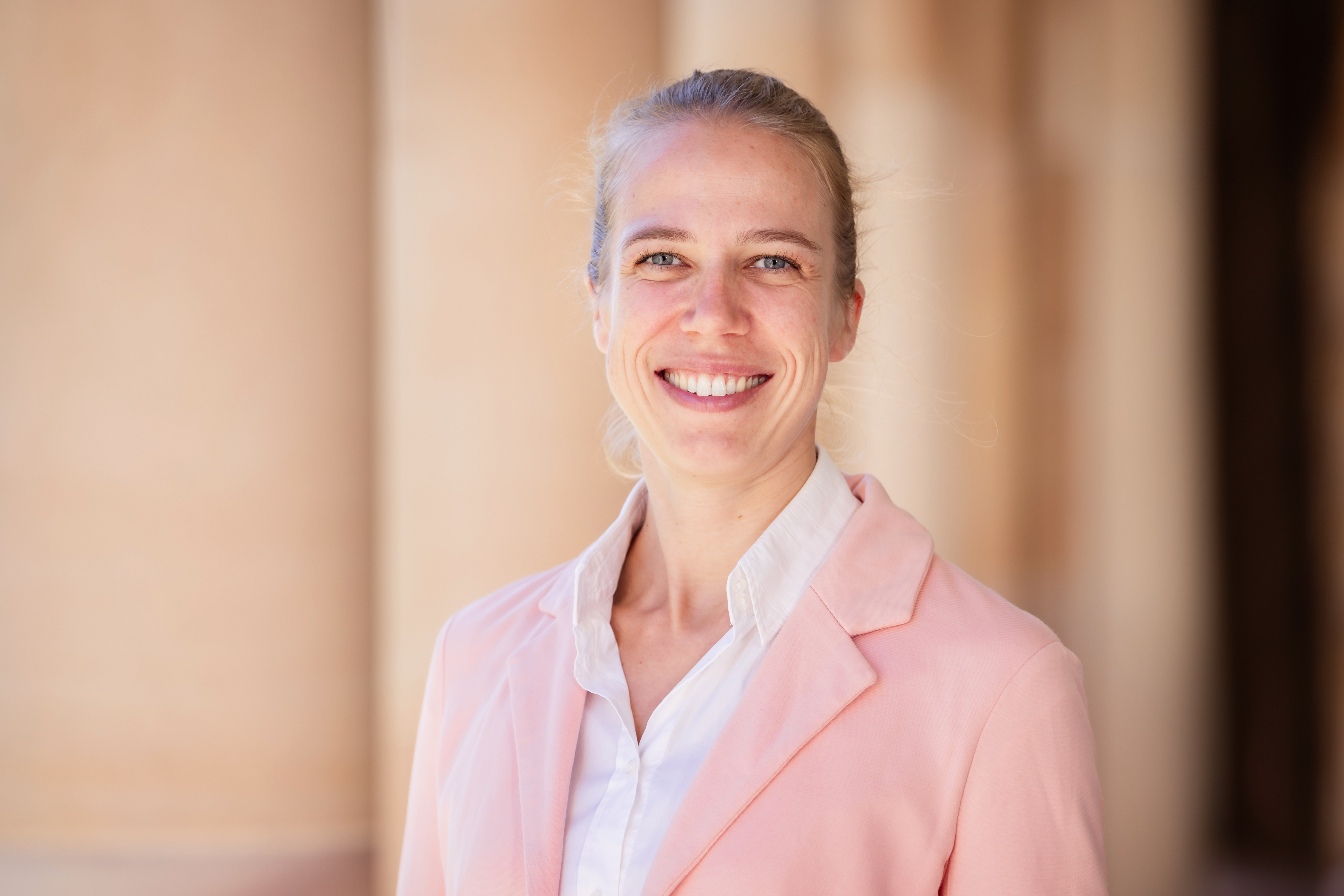
Dr. Saphira Rekker
Senior Research Fellow (ARC DECRA)
The University of Queensland Business School

Sue Lyn Stubbs
Doctoral Candidate
The University of Queensland Business School

Adrien Rose
Doctoral Candidate
The London School of Economics
Founding Co-authors

Dr. Chris Greig
Senior Research Scientist
Andlinger Center for Energy and the Environment, Princeton University

Dr. Matthew Ives
Associate
Institute for New Economic Thinking, Oxford University
Dr. Belinda Wade
Industry Professor
The University of Queensland Business School
Collaborators & Co-authors

Dr. Matthew Hornsey
Professor, ARC Laureate
The University of Queensland Business School
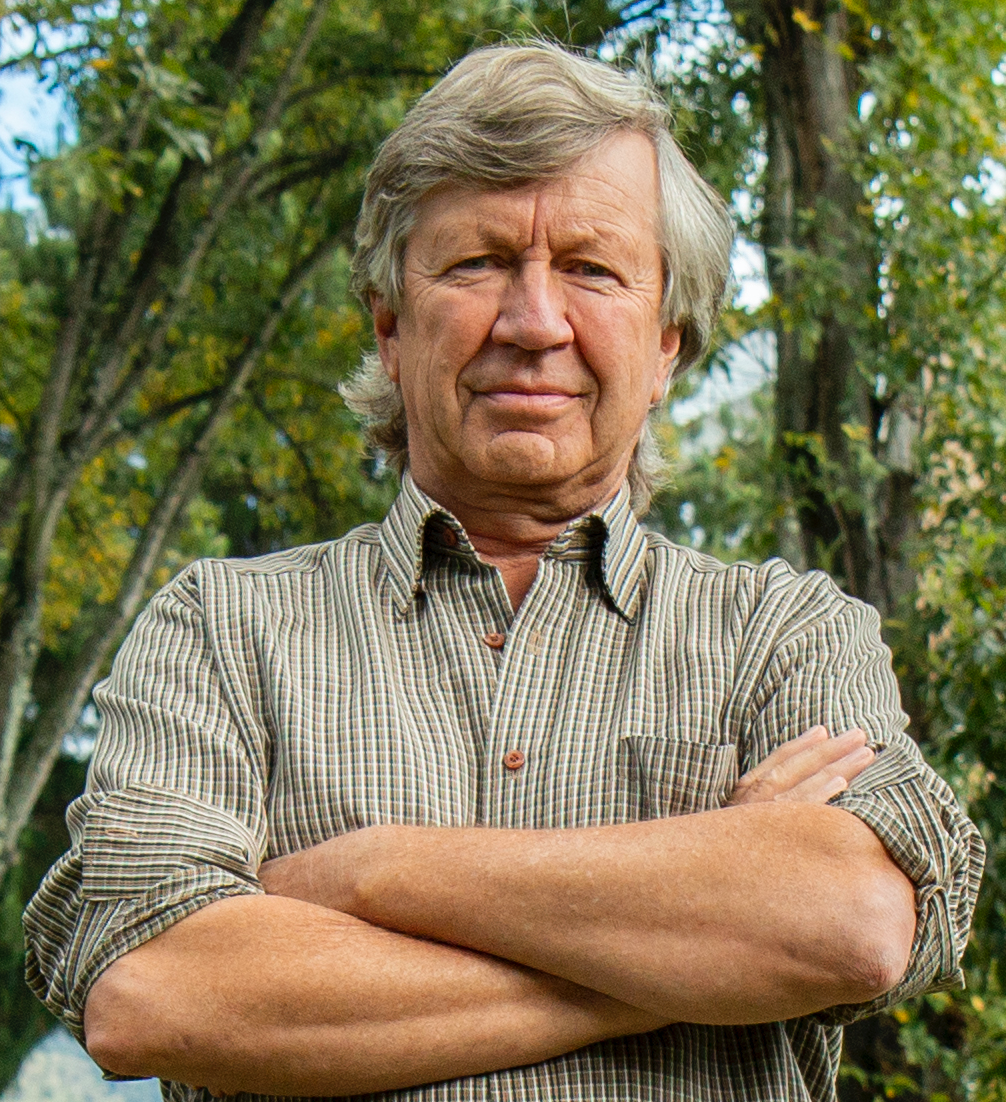
Richard Heede
Director
Climate Accountability Institute

Dr. Gireesh Shrimali
Head of Transition Finance Research
University of Oxford

Mark Roelfsema
Senior Researcher
PBL Netherlands Environmental Assessment Agency

Dr. David Kampmann
Research Fellow
Oxford Sustainable Finance Group, Smith School of Enterprise and the Environment

Dr. Jacquelyn Humphrey
Associate Professor in Finance
University of Queensland

Dr. Mark Dekker
Senior Researcher
PBL Netherlands Environmental Assessment Agency & Utrecht University

Dr. Anders Bjørn
Associate Professor, Department of Environmental and Resource Engineering
Quantitative Sustainability Assessment, Centre for Absolute Sustainability

Dr. Detlef van Vuuren
Professor, Integrated Assessment of Global Environmental Change & Senior Researcher
Utrecht University & PBL Netherlands Environmental Assessment Agency

Holger Hoffmann-Riem
Purposelab
Dr. Guangwu Chen
Adjunct Senior Fellow
The University of Queensland Business School
Research Assistants

Anusha Sabu
Research Assistant
The University of Queensland Business School

Hifza Naveed
Research Assistant
The University of Queensland Business School
Funders & Supporters



Our Work Referenced
ABN AMRO Research
Nature Editorial
Nature Sustainability Research Highlight
Get In Touch
Have questions or want to learn more about how Carbon Budget Tracker can help your organization?
Data & Scenario Use Disclaimer
User-entered self-assessment inputs are linked across platform charts and datasets. Results rely on sector-specific scenario assumptions and are designed to compare a company's current position versus selected scenarios and versus other sectors, highlighting inherent trade-offs; outputs are indicative and should be interpreted with care.
Legal Disclaimer
Carbon Budget Tracker provides information, data, and analysis for informational purposes only and makes no warranties—express or implied—about accuracy, completeness, reliability, suitability, or availability. Nothing on the platform constitutes investment or financial advice; users should conduct their own research and consult qualified advisors. Carbon Budget Tracker and its affiliates are not liable for any losses or damages arising from use of or reliance on platform content, data errors or omissions, technical issues, or business decisions made using the platform. Assessments draw on publicly available information and academic methodologies (including peer-reviewed work, working papers, and unpublished research) that may evolve; external sources may contain errors or be revised. The platform is provided “as is” and may reference third-party content for convenience without endorsement. By using the platform, users agree to indemnify Carbon Budget Tracker and its affiliates against claims arising from such use. This disclaimer may be updated periodically; continued use signifies acceptance. Governed by the laws of Australia.
Use of AI
This platform uses AI tools (including Anthropic's Claude) to assist with software development, data pipeline engineering, and website design. All scientific methodology, data analysis decisions, and research conclusions are made by the research team. AI-generated code is reviewed and validated by the team before deployment.
License
Our own analysis is licensed under a Creative Commons Attribution 4.0 International License (CC BY 4.0). Third-party data keep their own licences and terms; see Licences and citations.
Company assessments
Company results are model-based estimates that compare a company's reported and projected emissions with benchmark pathways. They depend on the choices shown on each page (pathway, sharing method, start year, company path) and on public data that may contain errors. They are not a finding that a company has breached any law, target or commitment, and they say nothing about a company's intentions. Results may change as methods, pathways and data are added or revised.
Corrections
If you think a figure is wrong, for example a company's emissions, plant ownership or closure dates, please use the contact form with the company, the figure and, if possible, a source. We review every report and correct errors as soon as we can. Companies are welcome to contact us about their results.
Privacy
The site uses no cookies and no analytics. Your browser remembers the last company you viewed (stored only on your device) so the page reopens where you left off.